Hawthorn
(Crataegus monogyna)
Produces white-pink blossom in May that becomes ruby-red berries, called haws, in summer.
Growth and size
Mature height: 10m.
Growth rate: 40-60cm per year.
Supplied as 20-50cm cell-grown saplings.
Can be planted all year round with proper care.
Value to wildlife
Supports more than 300 species of insect.
Flowers are eaten by dormice.
Source of pollen and nectar for bees and other pollinators.
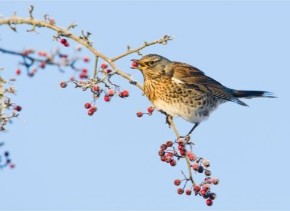
Haws are eaten by migrating birds such as redwings.
Soil and conditions
Shade-tolerant.
Prefers non-acidic, well-drained, moist soils.
Can be planted as part of a native hedgerow.
Wild cherry
(Prunus avium)
Produces beautiful blossom in spring and bright fruits in summer.
Growth and size
Mature height: 25m.
Supplied as 20-50cm cell-grown saplings.
Can be planted all year round with proper care.
Value to wildlife
Early source of nectar and pollen for insects including bees.
Cherries are eaten by birds.
Soil and conditions
Grows best in full sun and fertile soil.
Won't tolerate waterlogged soil.
Best planted in a sheltered spot.
Juniper
(Juniperus communis)
One of only three conifer species native to the UK. Its berries are used to flavour gin and are popular in liqueurs and sauces.
Growth and size
Mature height: 8m.
Supplied as 20-30m cell-grown saplings.
Can be planted all year round with proper care.
Value to wildlife
Provides dense cover for small nesting birds like goldcrest.
Birds including fieldfare, song thrush and mistle thrush will eat the berries.
Food plant of moth caterpillars including the juniper pug, juniper carpet and chestnut-coloured carpet.
Soil and conditions
Prefers full sun.
Grows in most well-drained soils.