Wildlife tree pack

Give your local wildlife a source of food and shelter.
Availability: In stock
SKU: MXWL
  • *
£115.00

About the wildlife tree pack

A mix of trees and shrubs that provide food and habitats for wildlife. Each pack contains a mix of hazel, silver birch, rowan, English oak, sessile oak and blackthorn, and helps create a living legacy for future generations. 

Choose from:

Pack of 105
15 x silver birch, 30 x hazel, 15 x rowan, 15 x sessile oak, 30 x blackthorn.
Pack for 420
90 x silver birch, 90 x hazel, 60 x rowan, 60 x sessile oak, 60 x English oak, 60 x blackthorn.

Silver birch
(Betula pendula)
Provides food and habitat for more than 300 insect species. Woodpeckers and other hole-nesting birds often nest in the trunk.

Growth and size
Mature height: 25m.
Supplied as 15-60cm cell-grown saplings.
Can be planted all year round with proper care.

Value to wildlife
Seeds are eaten by long-tailed tits, siskin, greenfinch and redpolls.
Food plant for a number of insects.

Soil and conditions
Prefers sandy or acidic soils.
Will grow in most conditions.

Grown responsibly
UK and Ireland sourced and grown (UKISG certified).
Reduces risk of spreading pests and diseases.
Delivered in 100% recyclable LDPE wrap.

Hazel
(Corylus avellana)
Hazelnuts are eaten by small mammals such as dormice and squirrels, as well as birds.

Growth and size
Mature height: 8m.
Supplied as 15-60cm cell-grown saplings.
Can be planted all year round with proper care.

Value to wildlife
Source of early pollen for bees that's an important protein for their growth and development.
Host plant for moth caterpillars such as the large emerald and barred umber.
Nuts are a favourite food of birds and mammals, including hazel dormice.

Soil and conditions
Tolerates most soils, especially damp or wet areas.
Forms a bushier shape on drier soils.

Grown responsibly
UK and Ireland sourced and grown (UKISG certified).
Reduces risk of spreading pests and diseases.
Delivered in 100% recyclable LDPE wrap.

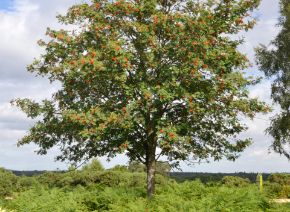
Rowan
(Sorbus aucuparia)
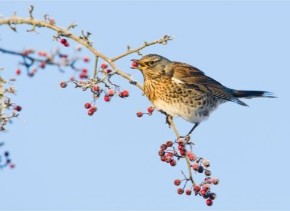
The bright-red berries are a rich source of food for birds, especially thrushes, redstarts and waxwing. 

Growth and size
Mature height: 15m.
Supplied as 15-60cm cell-grown saplings.
Can be planted all year round with proper care.

Value to wildlife
Source of pollen and nectar for bees and other pollinators.
Host plant for moth caterpillars such as the larger Welsh wave and autumn green carpet.
Berries are eaten by thrushes.

Soil and conditions
Grows in most soils.
Prefers light, well-drained and humus-rich conditions.

Grown responsibly
UK and Ireland sourced and grown (UKISG certified).
Reduces risk of spreading pests and diseases.
Delivered in 100% recyclable LDPE wrap.

Sessile oak
(Quercus petraea)
Provides habitat for more than 280 species of insect, as well as mosses, liverworts and lichen. Acorns are eaten by mammals and birds.

Growth and size
Mature height: 40m.
Growth rate: 20-30cm per year.
Supplied as 15-60cm cell-grown saplings.
Can be planted all year round with proper care.

Value to wildlife
Provides a habitat for more than 280 species of insect, which feed birds and other predators. 
Bark is a habitat for moss, lichen and liverwort.
Deadwood provides nesting cavities for birds and bats.
Acorns are eaten by birds and mammals, including jays, badgers and squirrels.

Soil and conditions
Does well in most well-drained soils.

Grown responsibly
UK and Ireland sourced and grown (UKISG certified).
Reduces risk of spreading pests and diseases.
Delivered in 100% recyclable LDPE wrap.

Blackthorn
(Prunus spinosa)
Blackthorn foliage is a great food source for caterpillars, and birds often nest among the dense thickets. The sloes are eaten by birds.

Growth and size
Mature height: 4m.
Supplied as 15-60cm cell-grown saplings.
Can be planted all year round with proper care.

Value to wildlife
Early source of nectar and pollen for bees and other insects.
Food plant of lackey, magpie, swallow-tailed and yellow-tailed moths, as well as black and brown hairstreak butterflies.
Birds often nest among the dense, thorny thickets.

Soil and conditions
Grows in moist, well-drained soil.
Prefers full sunlight.

Grown responsibly
UK and Ireland sourced and grown (UKISG certified).
Reduces risk of spreading pests and diseases.
Delivered in 100% recyclable LDPE wrap.

English oak
(Quercus robur)
Supports more wildlife than any other native tree - around 2,300 species!

Growth and size
Mature height: 20-40m.
Supplied as 15-60cm cell-grown saplings.
Can be planted all year round with proper care.

Value to wildlife
Food plant of purple hairstreak butterflies.
Leaf mould supports fungi and invertebrates such as stag beetles.
Bats and birds such as pied flycatcher and marsh tit nest in holes and crevices.

Soil and conditions
Tolerates most well-drained soils.
Avoid waterlogged sites.
Grown responsibly
UK and Ireland sourced and grown (UKISG certified).
Reduces risk of spreading pests and diseases.
Delivered in 100% recyclable LDPE wrap.

About the wildlife tree pack

A mix of trees and shrubs that provide food and habitats for wildlife. Each pack contains a mix of hazel, silver birch, rowan, English oak, sessile oak and blackthorn, and helps create a living legacy for future generations. 

Choose from:

Pack of 105
15 x silver birch, 30 x hazel, 15 x rowan, 15 x sessile oak, 30 x blackthorn.
Pack for 420
90 x silver birch, 90 x hazel, 60 x rowan, 60 x sessile oak, 60 x English oak, 60 x blackthorn.

Silver birch
(Betula pendula)
Provides food and habitat for more than 300 insect species. Woodpeckers and other hole-nesting birds often nest in the trunk.

Growth and size
Mature height: 25m.
Supplied as 15-60cm cell-grown saplings.
Can be planted all year round with proper care.

Value to wildlife
Seeds are eaten by long-tailed tits, siskin, greenfinch and redpolls.
Food plant for a number of insects.

Soil and conditions
Prefers sandy or acidic soils.
Will grow in most conditions.

Grown responsibly
UK and Ireland sourced and grown (UKISG certified).
Reduces risk of spreading pests and diseases.
Delivered in 100% recyclable LDPE wrap.

Hazel
(Corylus avellana)
Hazelnuts are eaten by small mammals such as dormice and squirrels, as well as birds.

Growth and size
Mature height: 8m.
Supplied as 15-60cm cell-grown saplings.
Can be planted all year round with proper care.

Value to wildlife
Source of early pollen for bees that's an important protein for their growth and development.
Host plant for moth caterpillars such as the large emerald and barred umber.
Nuts are a favourite food of birds and mammals, including hazel dormice.

Soil and conditions
Tolerates most soils, especially damp or wet areas.
Forms a bushier shape on drier soils.

Grown responsibly
UK and Ireland sourced and grown (UKISG certified).
Reduces risk of spreading pests and diseases.
Delivered in 100% recyclable LDPE wrap.

Rowan
(Sorbus aucuparia)
The bright-red berries are a rich source of food for birds, especially thrushes, redstarts and waxwing. 

Growth and size
Mature height: 15m.
Supplied as 15-60cm cell-grown saplings.
Can be planted all year round with proper care.

Value to wildlife
Source of pollen and nectar for bees and other pollinators.
Host plant for moth caterpillars such as the larger Welsh wave and autumn green carpet.
Berries are eaten by thrushes.

Soil and conditions
Grows in most soils.
Prefers light, well-drained and humus-rich conditions.

Grown responsibly
UK and Ireland sourced and grown (UKISG certified).
Reduces risk of spreading pests and diseases.
Delivered in 100% recyclable LDPE wrap.

Sessile oak
(Quercus petraea)
Provides habitat for more than 280 species of insect, as well as mosses, liverworts and lichen. Acorns are eaten by mammals and birds.

Growth and size
Mature height: 40m.
Growth rate: 20-30cm per year.
Supplied as 15-60cm cell-grown saplings.
Can be planted all year round with proper care.

Value to wildlife
Provides a habitat for more than 280 species of insect, which feed birds and other predators. 
Bark is a habitat for moss, lichen and liverwort.
Deadwood provides nesting cavities for birds and bats.
Acorns are eaten by birds and mammals, including jays, badgers and squirrels.

Soil and conditions
Does well in most well-drained soils.

Grown responsibly
UK and Ireland sourced and grown (UKISG certified).
Reduces risk of spreading pests and diseases.
Delivered in 100% recyclable LDPE wrap.

Blackthorn
(Prunus spinosa)
Blackthorn foliage is a great food source for caterpillars, and birds often nest among the dense thickets. The sloes are eaten by birds.

Growth and size
Mature height: 4m.
Supplied as 15-60cm cell-grown saplings.
Can be planted all year round with proper care.

Value to wildlife
Early source of nectar and pollen for bees and other insects.
Food plant of lackey, magpie, swallow-tailed and yellow-tailed moths, as well as black and brown hairstreak butterflies.
Birds often nest among the dense, thorny thickets.

Soil and conditions
Grows in moist, well-drained soil.
Prefers full sunlight.

Grown responsibly
UK and Ireland sourced and grown (UKISG certified).
Reduces risk of spreading pests and diseases.
Delivered in 100% recyclable LDPE wrap.

English oak
(Quercus robur)
Supports more wildlife than any other native tree - around 2,300 species!

Growth and size
Mature height: 20-40m.
Supplied as 15-60cm cell-grown saplings.
Can be planted all year round with proper care.

Value to wildlife
Food plant of purple hairstreak butterflies.
Leaf mould supports fungi and invertebrates such as stag beetles.
Bats and birds such as pied flycatcher and marsh tit nest in holes and crevices.

Soil and conditions
Tolerates most well-drained soils.
Avoid waterlogged sites.
Grown responsibly
UK and Ireland sourced and grown (UKISG certified).
Reduces risk of spreading pests and diseases.
Delivered in 100% recyclable LDPE wrap.

Planting information:

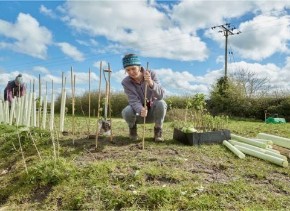
As a rough guide, trees are usually planted at around 2m intervals but please take into account the final size of the tree and be aware of buildings, services and other plants nearby to ensure that damage cannot occur from the roots and canopy as the tree grows.

Oct-Feb - This is the best time of year for planting trees and your sapling is dormant, as long as it is kept free from frost and wind as well as being kept moist and in light conditions then it will last a few weeks before planting.

Mar-Sept - Your sapling is growing fast and will need planting as soon as possible. Planting it immediately will ensure it does not dry out, lose nutrients etc.

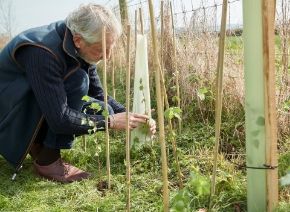
Please note that you may require tree protection if your saplings will be at risk of damage from mammals such as rabbits or deer. Take a look at our available tree protection options.

On-going care requirements:

Once planted, your tree will need some care and attention for a few years; this will mainly be weeding around the base to reduce the competition for nutrients and ensuring your tree has enough water. For more information about caring for your trees, click here.

Order subsidised hedgerow tree packs by 12.00pm on Thursday 18 December 2025 for pre-Christmas delivery.

Free delivery 

Free standard delivery for all trees within 10 working days. Orders of more than 900 trees may take longer.

Order information

We are unable to hold or delay orders. Multiple items or accessories may be delivered separately.

Sapling appearance

You will receive a cell-grown sapling, approximately 15-60cm in height. Depending on the season (especially early spring), your sapling may not look very perky on arrival. Don't worry - once planted, it should recover quickly.

Shipping restrictions

We do not deliver to Northern Ireland, the Channel Islands or the Isle of Man.

Customers who bought this item also bought

Year round colour tree pack

MXCL
See nature’s rich spectrum in all its glory.
£115.00

Targeting tree disease pack

WTDPP45
Help to restore existing woodland and regenerate the countryside
£32.00

Tubes and stakes

TS120STK
Protect your trees to help them grow tall.
£19.00

Wild harvest tree pack

MXED
Get fruity and grow your own berries.
£115.00