Targeting tree disease pack

A mix of trees to help restore existing woodland and regenerate the countryside.
Availability: In stock
SKU: WTDPP45
  • *
  • *
£32.00

Targeting tree disease packs

Trees and woods are crucial. They give homes to wildlife, clean air and water and provide food and fuel. But they're under threat. 60 million trees have already been taken by Dutch elm disease and 126 million trees in British woods are at risk of ash dieback. There are 14 pests and diseases attacking our native trees, 4 of which have reached epidemic levels and more diseases are nearing our borders.

This pack is subsidised by the Woodland Trust and our partners* to help you restore existing woodland or hedgerows and regenerate countryside that is threatened by disease.

Included in this pack are trees suited to growing on large plots of land. It includes 45 cell-grown saplings, approximately 20-60cm in height. You’ll receive 15 of each tree species and we aim to match the trees provenance to your location whenever possible.

Choose from different mixes to ensure you get a pack to suit your location: 

  • Silver Birch, Common Beech, English Oak
  • Hornbeam, Common Beech, Enlgish Oak
  • Hornbeam, Wild Cherry, English Oak
  • Hornbeam, Common Beech, Wild Cherry
  • Silver Birch, Hornbeam, Wild Cherry
  • Silver Birch, Rowan, English Oak
  • Silver Birch, Rowan, Sessile Oak 

These trees are ideally suited to replacing diseased trees that have grown through hedgerows. Please note that species within these packs can grow to a height of 20-40m, so take this into consideration when planting to ensure they have sufficient space.

Tree protection options: 

You can choose whether you want to purchase tree protection alongside your saplings or not. Please consider whether your saplings need protection, particularly from browsing mammals. 

  • No tree protection – your order will contain saplings, but no tree protection. We would suggest this option if your saplings are unlikely to be affected by browsing mammals of any size, or if you have plans for alternative tree protection e.g., browsing reduction, fencing. 

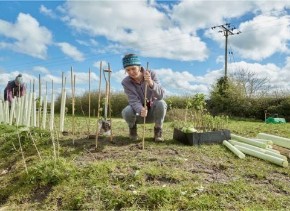
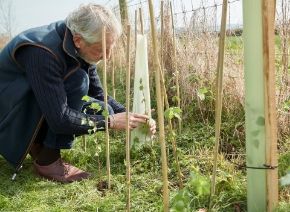
  • Easywraps and canes – your order will contain saplings as well as easywraps and canes. This option will help to provide protection from small mammals e.g. voles. 

  • Tubes and stakes - your order will contain saplings as well as tubes and stakes. This option will help to provide protection from small and large browsing mammals. 

Estimated full-grown height: 

Common beech: 40m, Hornbeam: 30m, English Oak: 40m, Sessile Oak: 40m, Silver birch: 25m, Wild Cherry: 25m.

Purchase size and growth:

These trees are cell-grown saplings, ranging from approximately 20-50cm in height. Cell grown trees can be planted all year round in most situations as long as they are given the correct care. Please be aware that depending upon the time of year you receive your sapling (particularly early spring) it may not look very perky upon arrival, please do not worry once it has been planted it should pick up quickly. 

UK and Ireland Sourced and Grown (UKISG): 

Every sapling that we provide is UK and Ireland sourced and grown to minimise the risk of importing and spreading tree pests and diseases. Seeds are collected and stored in the UK and Ireland, and they are all coded and batched so that we can track each individual tree.

More information about the trees in this pack can be found here.

More information about how to identify and prevent tree diseases is available here. 

*Thanks to generous support from our partners, you will only pay 50% of the cost of these packs.

The images in this product listing show the saplings bundled and wrapped. This plastic wrap is made from LDPE (low-density polyethylene) and is 100% recyclable, we encourage users to recycle them when you are ready to plant your trees.

Targeting tree disease packs

Trees and woods are crucial. They give homes to wildlife, clean air and water and provide food and fuel. But they're under threat. 60 million trees have already been taken by Dutch elm disease and 126 million trees in British woods are at risk of ash dieback. There are 14 pests and diseases attacking our native trees, 4 of which have reached epidemic levels and more diseases are nearing our borders.

This pack is subsidised by the Woodland Trust and our partners* to help you restore existing woodland or hedgerows and regenerate countryside that is threatened by disease.

Included in this pack are trees suited to growing on large plots of land. It includes 45 cell-grown saplings, approximately 20-60cm in height. You’ll receive 15 of each tree species and we aim to match the trees provenance to your location whenever possible.

Choose from different mixes to ensure you get a pack to suit your location: 

  • Silver Birch, Common Beech, English Oak
  • Hornbeam, Common Beech, Enlgish Oak
  • Hornbeam, Wild Cherry, English Oak
  • Hornbeam, Common Beech, Wild Cherry
  • Silver Birch, Hornbeam, Wild Cherry
  • Silver Birch, Rowan, English Oak
  • Silver Birch, Rowan, Sessile Oak 

These trees are ideally suited to replacing diseased trees that have grown through hedgerows. Please note that species within these packs can grow to a height of 20-40m, so take this into consideration when planting to ensure they have sufficient space.

Tree protection options: 

You can choose whether you want to purchase tree protection alongside your saplings or not. Please consider whether your saplings need protection, particularly from browsing mammals. 

  • No tree protection – your order will contain saplings, but no tree protection. We would suggest this option if your saplings are unlikely to be affected by browsing mammals of any size, or if you have plans for alternative tree protection e.g., browsing reduction, fencing. 

  • Easywraps and canes – your order will contain saplings as well as easywraps and canes. This option will help to provide protection from small mammals e.g. voles. 

  • Tubes and stakes - your order will contain saplings as well as tubes and stakes. This option will help to provide protection from small and large browsing mammals. 

Estimated full-grown height: 

Common beech: 40m, Hornbeam: 30m, English Oak: 40m, Sessile Oak: 40m, Silver birch: 25m, Wild Cherry: 25m.

Purchase size and growth:

These trees are cell-grown saplings, ranging from approximately 20-50cm in height. Cell grown trees can be planted all year round in most situations as long as they are given the correct care. Please be aware that depending upon the time of year you receive your sapling (particularly early spring) it may not look very perky upon arrival, please do not worry once it has been planted it should pick up quickly. 

UK and Ireland Sourced and Grown (UKISG): 

Every sapling that we provide is UK and Ireland sourced and grown to minimise the risk of importing and spreading tree pests and diseases. Seeds are collected and stored in the UK and Ireland, and they are all coded and batched so that we can track each individual tree.

More information about the trees in this pack can be found here.

More information about how to identify and prevent tree diseases is available here. 

*Thanks to generous support from our partners, you will only pay 50% of the cost of these packs.

The images in this product listing show the saplings bundled and wrapped. This plastic wrap is made from LDPE (low-density polyethylene) and is 100% recyclable, we encourage users to recycle them when you are ready to plant your trees.

Planting information

Spacing
Trees: plant trees roughly 2m apart. Consider the final size of the tree, nearby buildings, services and other plants to avoid future damage to the roots and canopy as the tree grows.

Hedgerow: to produce a single row, plant trees around 30cm apart. For a thick hedge, plant in two rows with equal staggering of 50cm between saplings and 40cm between rows.

Tree protection
If your sapling could be at risk from animals like rabbits or deer, consider protecting them. Take a look at our tree protection options.

Best time to plant
October–March (dormant season): ideal planting time.

April–September: saplings are growing fast and should be planted as soon as possible. Take a little extra care over the warmer months.
If you need to delay planting for a few weeks, keep saplings moist, in light conditions and free from frost and wind.

Ongoing care
Weed around the base to reduce competition for nutrients.
Water regularly, especially during dry periods.
For detailed guidance, take a look at our tree care instructions.

Silver birch
(Betula pendula)
A graceful tree with light, triangular-shaped leaves and distinctive, silvery-white peeling bark.

Growth and size
Mature height: 25m.
Supplied as 20-50cm cell-grown saplings.
Can be planted all year round with proper care.

Value to wildlife
Seeds are eaten by long-tailed tits, siskin, greenfinch and redpolls.
Food plant for more than 300 species of insect.

Soil and conditions
Prefers sandy or acidic soils.
Will grow in most conditions.

Common beech
(Fagus sylvatica)
A fast-growing tree with wavy-edged leaves that turn coppery-bronze in autumn.

Growth and size
Mature height: 40m.
Supplied as 20-50cm cell-grown saplings.
Can be planted all year round with proper care.

Value to wildlife
Food plant for moth caterpillars, including barred hook-tip, clay triple-lines and olive crescent.
Seeds are eaten by mice, voles, squirrels and birds.

Soil and conditions
Grows well in partial shade on well-drained soil.
Not suitable for waterlogged sites.

English oak
(Quercus robur)
Also known as common or pedunculate oak. this tree is known for its size, age and acorns.

Growth and size
Mature height: 20-40m.
Supplied as 20-50cm cell-grown saplings.
Can be planted all year round with proper care.

Value to wildlife
Supports more than 2,300 species of insects, birds, fungi and mammals.
Acorns are eaten by squirrels, deer, badgers and birds.
Food plant for caterpillars including purple hairstreak butterfly and many moths.

Soil and conditions
Prefers well-drained, fertile soils.
Thrives in full sun, tolerates light shade.
Needs plenty of space for roots and canopy.

Hornbeam
(Carpinus betulus)
A tree with doubly serated leaves. In autumn, its spring catkins become papery green-winged fruits that hang in tiered clusters.

Growth and size
Mature height: 30m.
Supplied as 20-50cm cell-grown saplings.
Can be planted all year round with proper care.

Value to wildlife
Leaves provide shelter, roosting, nesting and foraging places for birds and small mammals.
Food plant for many insects.
Seeds are eaten by finches, tits and small mammals.

Soil and conditions
Can withstand severe weather.
Grows in almost any light and well-drained soil.

Wild cherry
(Prunus avium)
Produces beautiful blossom in spring and bright fruits in summer.

Growth and size
Mature height: 25m.
Supplied as 20-50cm cell-grown saplings.
Can be planted all year round with proper care.

Value to wildlife
Early source of nectar and pollen for insects including bees.
Cherries are eaten by birds.

Soil and conditions
Grows best in full sun and fertile soil.
Won't tolerate waterlogged soil.
Best planted in a sheltered spot.

Rowan
(Sorbus aucuparia)
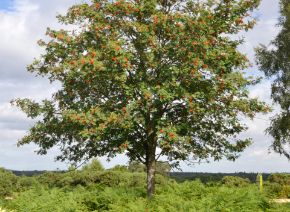
Creamy-white springtime flowers transform into vibrant orange-red berries in autumn.

Growth and size
Mature height: 15m.
Supplied as 20-50cm cell-grown saplings.
Can be planted all year round with proper care.

Value to wildlife
Source of pollen and nectar for bees and other pollinators.
Host plant for moth caterpillars such as the larger Welsh wave and autumn green carpet.
Berries are eaten by thrushes.

Soil and conditions
Grows in most soils.
Prefers light, well-drained and humus-rich conditions.

Sessile oak
(Quercus petraea)
A hardy oak that differs from English oak with its upright trunk, straighter branches, longer stalked leaves and stalkless acorns.

Growth and size
Mature height: 40m.
Supplied as 20-50cm cell-grown saplings.
Can be planted all year round with proper care.

Value to wildlife
Provides a habitat for more than 280 species of insect, which feed birds and other predators. 
Bark is a habitat for moss, lichen and liverwort.
Deadwood provides nesting cavities for birds and bats.
Acorns are eaten by birds and mammals, including jays, badgers and squirrels.

Soil and conditions
Does well in most well-drained soils.
Free delivery 

Free standard delivery for all trees within 10 working days. Orders of more than 900 trees may take longer. 

Order information 

We are unable to hold or delay orders.

To reduce packaging waste and minimise environmental impact, multiple items ordered together may be packed in a single box. All trees will remain fully protected during delivery. If you would prefer your trees to be packaged separately, please contact our support services team via email at shop@woodlandtrust.org.uk and we will do our best to accommodate your request.

Please note: If your order contains a mix of product types (e.g. trees, tree protection items, merchandise or subsidised packs), items may be delivered separately. This means your order may arrive in more than one delivery.

Sapling appearance 

You will receive a cell-grown sapling, approximately 15–60cm in height. Depending on the season (especially early spring), your sapling may not look very perky on arrival. Don’t worry – once planted, it should recover quickly. 

Shipping restrictions 

We do not deliver to Northern Ireland, the Channel Islands or the Isle of Man. 

Further information 

You can find more information about delivery and packaging in our frequently asked questions.

Customers who bought this item also bought

Plant for pollinators tree pack

WTPP210
A mix of trees that provide nectar and nesting sites for pollinators.
£92.00

Shelterbelt tree pack

WTSBT210
A mix of trees that can help protect your livestock or crops.
£92.00

Kent and Sussex: Targeting tree disease packs

2WTDPP45
A mix of species specially selected for the Kent and Sussex landscape.
£32.00

Traditional hedgerow tree pack

WTTHDGE
A mix of trees that creates pathways for wildlife to move through and live in.
£63.00