Wayfaring (Viburnum lantana)

An ornamental shrub with pretty white flowers and berries that turn from red to black.
Availability: In stock
SKU: VILA
  • *
£10.95

About wayfaring
(Viburnum lantana)

An ornamental shrub with pretty white flowers in late spring and toxic berries in autumn that turn from red to black.

Growth and size
Mature height: 6m.
Growth rate: 20-40cm per year.
Supplied as 20-50cm cell-grown saplings.
Can be planted all year round with proper care.

Value to wildlife
Provides a source of nectar for hoverflies.
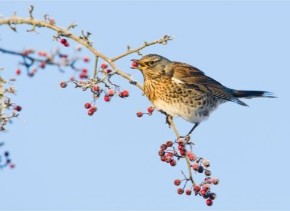
Berries are eaten by birds.
Food plant of several moth species.

Soil and conditions
A hardy species that grows in most conditions.
Prefers well-drained soils.

Grown responsibly
UK sourced and grown (UKISG certified).
Reduces risk of spreading pests and diseases.
Delivered in 100% recyclable LDPE wrap.

Did you know?
The wayfaring tree was named by the herbalist Gerard in 1597, who noticed it on the routes between Wiltshire and London. It's said that if you see a wayfaring tree, you are on or near a path.

About wayfaring
(Viburnum lantana)

An ornamental shrub with pretty white flowers in late spring and toxic berries in autumn that turn from red to black.

Growth and size
Mature height: 6m.
Growth rate: 20-40cm per year.
Supplied as 20-50cm cell-grown saplings.
Can be planted all year round with proper care.

Value to wildlife
Provides a source of nectar for hoverflies.
Berries are eaten by birds.
Food plant of several moth species.

Soil and conditions
A hardy species that grows in most conditions.
Prefers well-drained soils.

Grown responsibly
UK sourced and grown (UKISG certified).
Reduces risk of spreading pests and diseases.
Delivered in 100% recyclable LDPE wrap.

Did you know?
The wayfaring tree was named by the herbalist Gerard in 1597, who noticed it on the routes between Wiltshire and London. It's said that if you see a wayfaring tree, you are on or near a path.

Planting information

Spacing
Plant trees roughly 2m apart. Consider the final size of the tree, nearby buildings, services and other plants to avoid future damage to the roots and canopy as the tree grows.

Tree protection
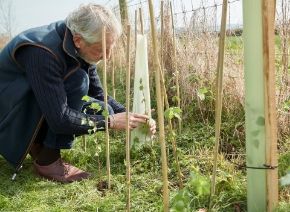
If your sapling could be at risk from animals like rabbits or deer, consider protecting them. Take a look at our tree protection options.

Best time to plant
October-February (dormant season) - ideal planting time.
Keep your sapling moist, in light conditions and free from frost and wind. In these conditions, it can last a few weeks before planting.

Ongoing care
Weed around the base to reduce competition for nutrients.
Water regularly, especially during dry periods.
For detailed guidance, take a look at our tree care instructions.

Free delivery 

Free standard delivery for all trees within 10 working days. Orders of more than 900 trees may take longer. 

Order information 

We are unable to hold or delay orders. Multiple items or accessories may be delivered separately. 

To reduce packaging waste and minimise environmental impact, multiple items ordered together may be packed in a single box. All trees will remain fully protected during delivery. If you would prefer your trees to be packaged separately, please contact our support services team via email at shop@woodlandtrust.org.uk and we will do our best to accommodate your request. 

Sapling appearance 

You will receive a cell-grown sapling, approximately 15–60cm in height. Depending on the season (especially early spring), your sapling may not look very perky on arrival. Don’t worry – once planted, it should recover quickly. 

Shipping restrictions 

We do not deliver to Northern Ireland, the Channel Islands or the Isle of Man. 

Further information 

You can find more information about delivery and packaging in our frequently asked questions.
Customers who bought this item also bought

Crab apple (Malus sylvestris)

MASY
A hardy tree with sweet-smelling blossom and crunchy, tart fruit.
£10.95

Hazel (Corylus avellana)

COAV
Great for coppicing, with downy leaves, springtime catkins and autumn nuts.
£10.95

Dog rose (Rosa canina)

ROCA
A shrub with pink flowers in spring and orange-red hips in autumn.
£10.95

Blackthorn (Prunus spinosa)

PRSP
A thorny tree known for its sloes, commonly used to make gin.
£10.95